Real Estate Agents
How to Run a Real Estate Marketing Plan for Under $50 a Month
.png)
A $50-a-month marketing plan, in five lines
- The cheapest, highest-return marketing is staying in front of the database you already have.
- For about $50 a month, or $25 co-sponsored by a lender, one tool runs the automated parts.
- The plan is six steps: build one master list, send a monthly value report, reconnect cold contacts, act on intent signals, run a yearly equity review, and add a private home search.
- Past clients and referrals drive a large share of an agent's business, but only with consistent contact.
- You don't need an agency or paid leads to do any of it.
As a real estate agent, did you know that about 70% of your peers close five or fewer homes a year? The typical Realtor's gross income lands near $58,100 before expenses and taxes. You know how good commission can be, but you also know it comes in waves, so you keep grinding even when the next paycheck isn't promised.
When money is that tight, marketing is the first thing you cut. The median agent's whole marketing footprint is a $60 website, while the agents who pull ahead keep investing in the cheapest pipeline they have: the database they already built.
This real estate marketing plan shows you how to work that database for repeat and referral business on about $50 a month. The only paid piece is the real estate marketing tools that automate the heavy lifting. No agency, no lead spend, just the moves that work.
Why Your Database Beats Paid Leads Every Time
The cheapest deals you'll ever close come from people who already know you. Past clients and referrals make up a big share of most agents' business: Realtors pull 20% from repeat clients and 21% from referrals, and that share climbs the longer you're in the business. Put the two sources side by side:
- A past client: costs nothing to reach, already trusts you, and is far likelier to turn into repeat business.
- A paid lead: Trigger leads are dead. And paid leads runs hundreds of dollars a month, comes in cold, and usually never converts.
The only reason agents lean on paid leads is that working a database by hand is tedious, and it slides the moment you get busy. So the real question is how you keep that database warm without it eating your week. That's the system below.
What is Your Database Worth? Run the Numbers.
What's your database worth?
Repeat clients and referrals make up about 41% of a typical agent's business. Enter your numbers to see the repeat and referral deals your contacts could be worth in a year.
Homebot runs the staying-in-touch part of this for about $50 a month. Estimates only, based on NAR member data. Your market, database quality, and follow-up change the result.
The $50 Real Estate Marketing Plan, Step by Step
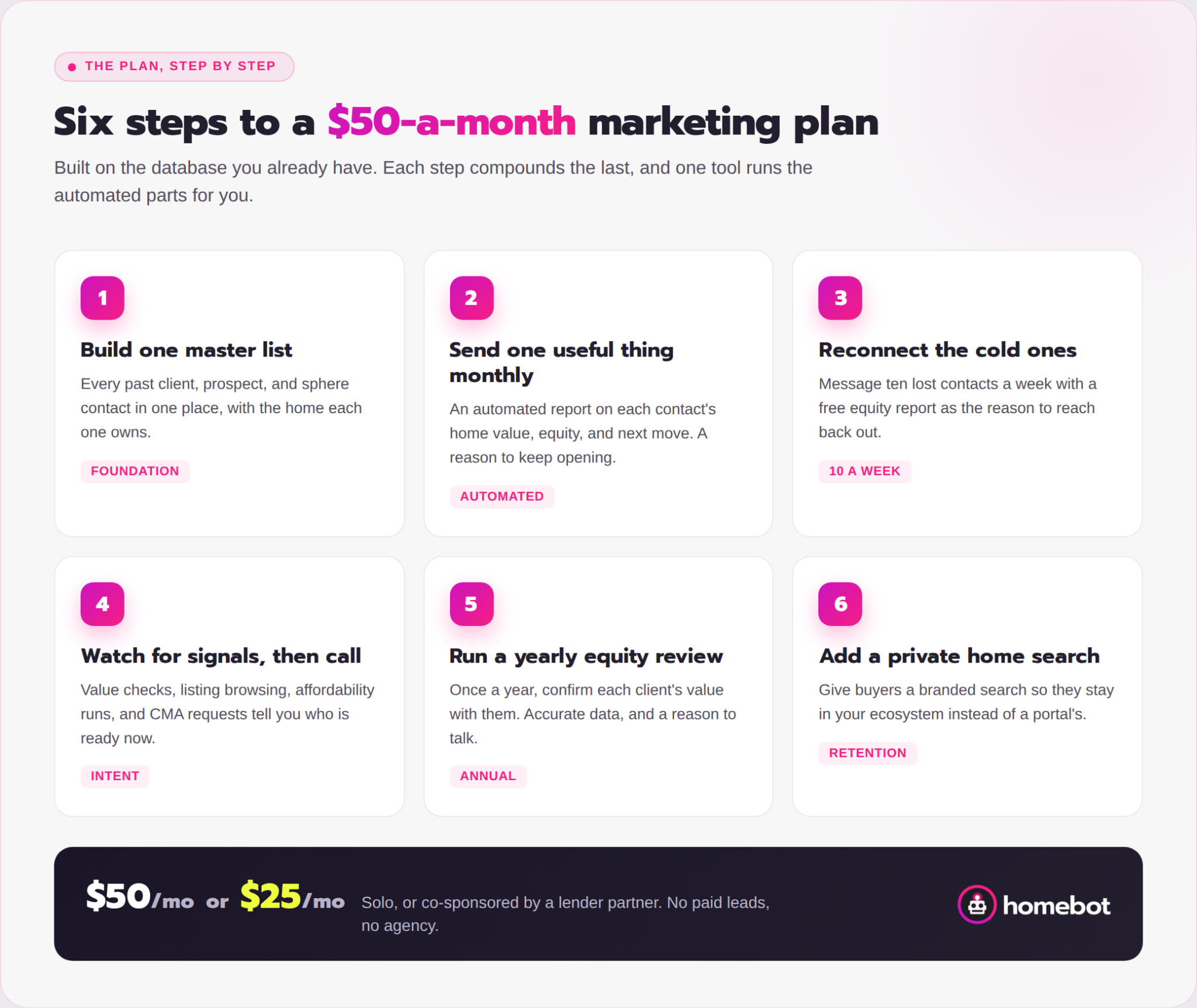
A successful real estate marketing plan that converts existing customers into deals really comes down to six steps. Each one takes an afternoon or less to set up, and once it's running, the tool handles the repetitive parts so you're not the one sending 150 emails by hand every month. Run them in order.
Step 1: Build one master list of everyone you know
Your database is probably scattered across your phone, your email, old closing files, and a CRM you half use. Pull it into one place. To start, you only need four fields per person:
- Name
- Mailing address
- The home they own
Then widen the net, because most agents badly undercount their sphere. Add anyone who would take your call:
- Clients and near-misses: past clients and anyone who almost bought with you.
- Personal sphere: friends, family, and neighbors.
- Your vendors: the lender, contractor, and stager you trust.
- Anyone who's hinted at moving: the coworker eyeing a bigger place, the friend with a baby on the way.
Land at 150 names and you're already in business. This is also the moment to pick the tool that will work this list for you so you're not babysitting a spreadsheet forever.
Step 2: Send one genuinely useful thing every month
The fastest way to get forgotten is to only reach out when you want something. The fix is a monthly touch that's actually useful to them, not a market-update email they delete. A monthly home value and equity report is the strongest one going, because every homeowner wants to know what their place is worth and almost nobody else is telling them.
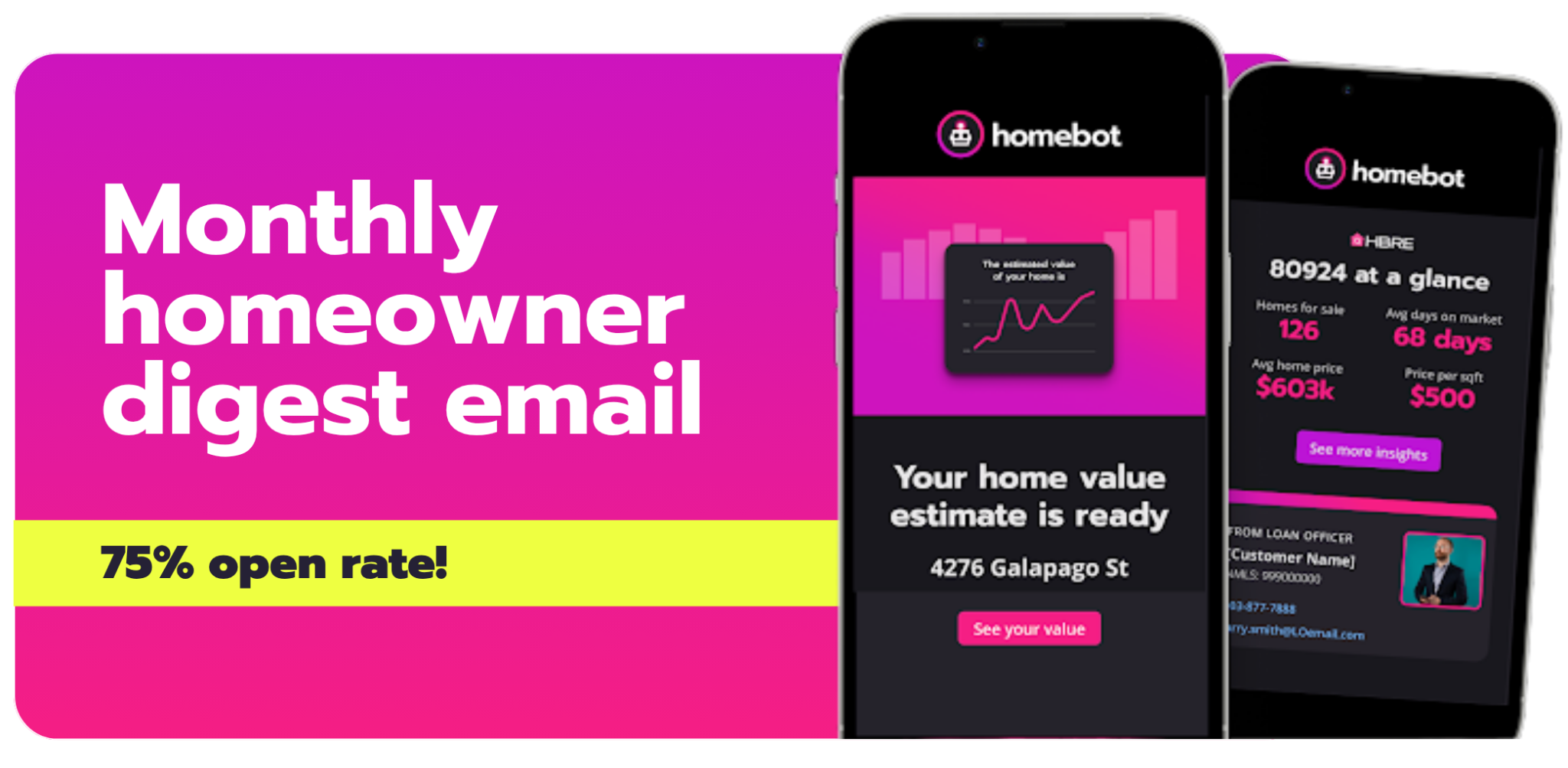
This is the part you automate. Set it once and every contact gets a branded report each month showing:
- Their home's value: an updated estimate every month.
- Their equity: how much they've built, and how fast it's growing.
- Their next move: what they could afford if they sold or moved up.
On Homebot that's the monthly Home Digest, and it's the engine the rest of the plan runs on. You write nothing, and your name lands in 150 inboxes every month on its own.
Step 3: Reconnect the cold ones with a reason to reach out
Now warm up the people you've lost touch with. Pull everyone you haven't spoken to in over a year and message ten a week. Skip "just checking in," which puts them on the spot to carry a conversation. Hand them something useful instead:
"Hey [name], I just set you up with a free report that tracks your home's value and equity every month. First one hits your inbox this week. Nothing you need to do, just reply if you ever want to talk through what it shows."
That reopens the relationship without asking for anything, and the monthly report keeps the contact going after that first text. Ten a week clears a 200-person list in about five months, twenty minutes at a time. If you want wording you can lift, steal from these reconnect email templates.
Step 4: Watch for buying and selling signals, then call
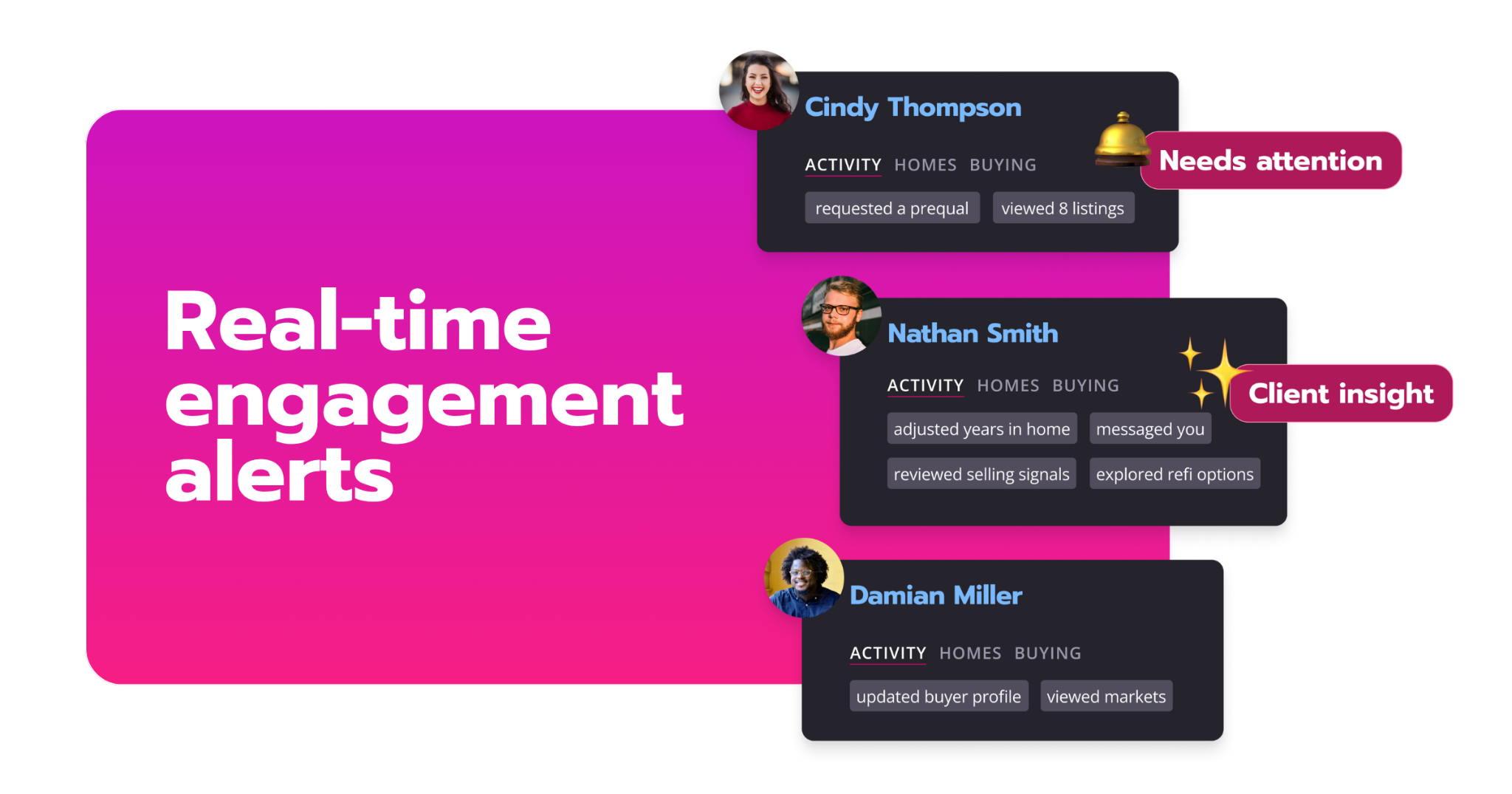
Staying in touch is half the job. The other half is catching someone the moment they're getting ready to move and reaching out before another agent does. Watch for the signals worth watching that a contact is heating up:
- Value-checking: opening their report or checking their home value over and over.
- Listing activity: repeated browsing in one area or price range.
- Running numbers: playing with affordability or mortgage calculators.
- Equity or CMA: a jump in equity, or a request for a comparative market analysis.
When you spot one, skip the generic check-in and call with the specific reason:
"Saw your neighborhood's heating up and your equity's crossed the point where a move-up actually pencils out. Want to run the numbers?"
A good tool surfaces these signals for you, so you're calling the five people most likely to act instead of dialing the whole list.
Step 5: Run a yearly equity review with every client
Once a year, go down your list and update each client's home value with them. A text does the job:
"Want to make sure your home value's still accurate. Any renovations or a refinance this year?"
Automated values are estimates, and they drift, especially in non-disclosure states where sale prices aren't public record. Confirming the number fixes it and hands you a natural reason to talk. More often than you'd expect, that one question turns into a real conversation about a move, a refi, or helping a kid buy their first place. You won't know until you ask, and once a year is enough to catch most of it.
Step 6: Give buyers a private place to search
When a past client starts shopping, you want them searching with you, not disappearing into Zillow and getting sold to three other agents. Give them a private, branded home search so your name rides every listing they open and you get the signal when they're serious.
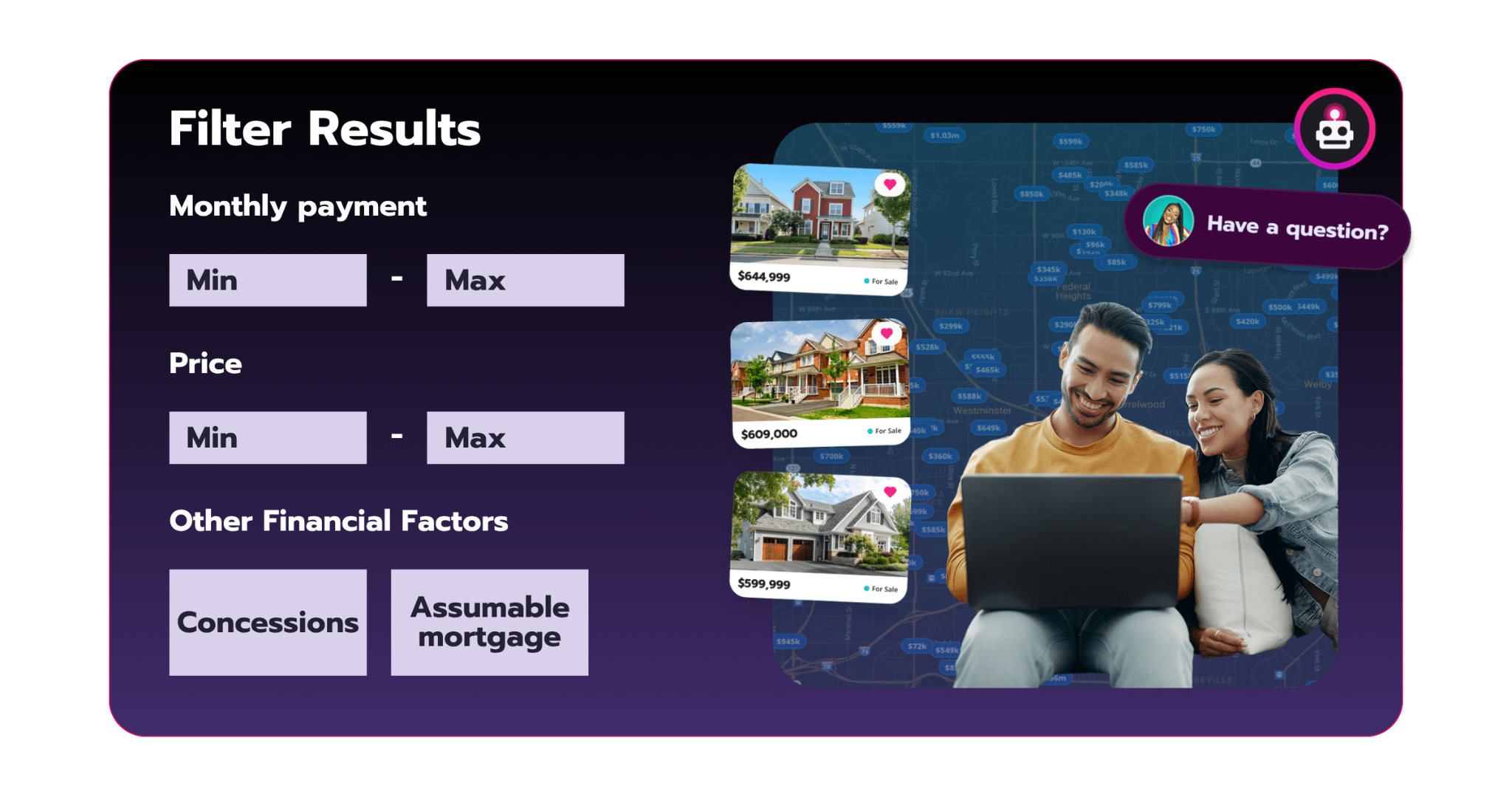
It also hands you another reason to reach out: "Set you up with a private search, no spam and no other agents in your inbox. What are you looking for?" That keeps you in the deal from the first click instead of finding out after they've already toured with someone else.

What the Whole Real Estate Marketing Plan with Homebot Costs
You've now got the six moves. Add them up and the recurring cost is a single line: the tool that automates the monthly report, the signals, and the search. On Homebot that runs $50 a month solo, or $25 when a lender partner co-sponsors you. Everything else, the list, the calls, the yearly review, is your time. Here's how that compares to what most agents spend:
- This plan: about $50 a month, or $25 co-sponsored by a lender.
- One portal lead source: hundreds a month, for leads shared with competing agents.
- A typical agent's marketing: thousands a year, much of it on things that never compound.
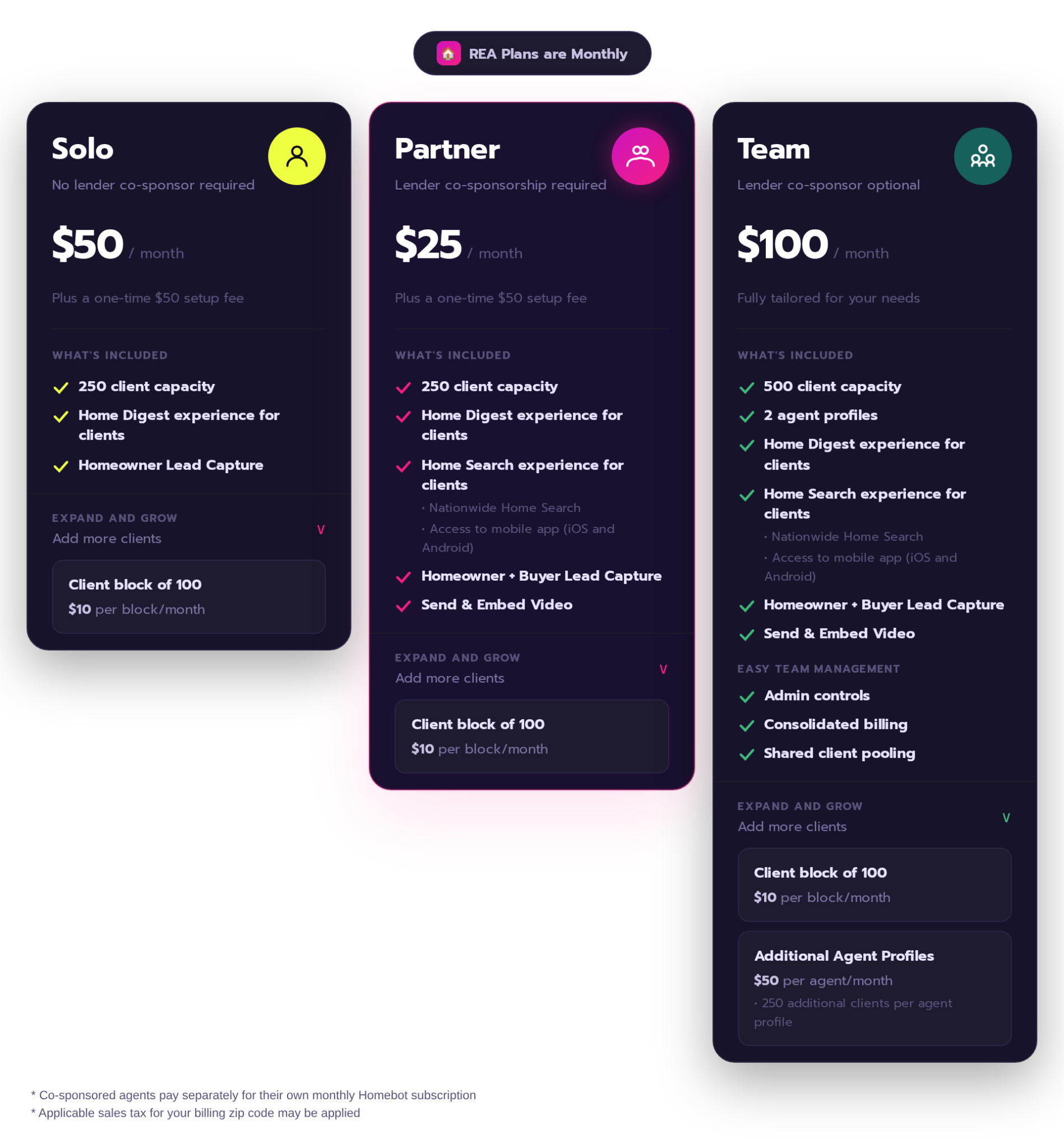
That gap is why co-sponsorship is worth a hard look: a lender partner covers half your cost, you both get branded on the same monthly report, and the arrangement quietly becomes a referral relationship. For most agents, that's the difference between a real marketing system and barely showing up.
Conclusion: Don’t Boil the Ocean. Start With One Step This Week
A thriving real estate marketing plan only pays off when you run it, and the agents who win are the ones working their database consistently while a tool handles the rest. You don't need a bigger budget to start, just one step this week:
- Pull your contacts into a single list.
- Send your first monthly value report.
- Text ten cold contacts the reconnect message from Step 3.
Homebot runs the automated half of this plan, the monthly report, the intent signals, and the branded home search, for $50 a month or $25 with a lender partner. Book a demo and see what it looks like with your own database loaded in.

Questions agents ask before they start
A focused plan built on your own database runs about $50 a month, and closer to $25 when a lender partner co-sponsors you. That covers the automated monthly reports, the intent signals, and the private home search. The bigger costs in real estate marketing come from paid leads and ad spend, and this plan is designed to grow repeat and referral business without either one.
Send one useful thing tied to the home they own: what it is worth now, how much equity they have built, and what their next move could look like. A monthly home value and equity report does this automatically and gives every contact a reason to keep opening your emails. It beats a generic newsletter because it is about the single biggest asset most people own.
Watch for behavior that signals intent: someone checking their home value over and over, browsing listings in one area or price range, running affordability or mortgage numbers, or asking what their home would sell for. Homebot surfaces these signals for you so you are calling the handful of people who are actually thinking about a move, instead of working the whole list cold.
You need one organized list and a reliable way to stay in front of it. That can be a full CRM, a spreadsheet, or a platform like Homebot that holds your database and handles the monthly outreach for you. The tool matters less than the habit. What moves the needle is that every contact hears from you consistently and that you know who to follow up with first.
No. Most people forget which agent they worked with within a few years, so the agent who shows back up first with something useful has the advantage. Lead with value instead of an apology for going quiet. A short message that sets them up with a free report on their home value reopens the relationship without putting them on the spot, and the monthly report keeps the contact going from there.
Yes, and for most agents it is the better return. Repeat and referral business comes from people who already know you, so the highest-value plan keeps you in front of past clients and your sphere rather than paying for strangers. Buying leads can supplement that once the nurture engine is running, but it does not need to be where you start.