Real Estate Agents
Marketing Automation for Real Estate Agents: Work Your Database Without Working Harder
.png)
You close a transaction. You mean to stay in touch. Three years pass, and your past client buys their next home with someone else. Not because they were unhappy with you. Not because they found someone better. Because they simply forgot you existed when it mattered.
88% of buyers say they would use their agent again or refer them to others. The satisfaction is there. The relationship capital is there. What's missing is the system that keeps you visible between transactions, consistently, without you manually managing every touchpoint.
That system is called marketing automation, and the agents using it are turning their past client databases into their most reliable source of new business.
In this guide, you'll learn exactly what marketing automation for real estate agents looks like in practice, which tools do what, how they work together, and how to get your stack up and running without overhauling your entire business.
What Is Marketing Automation for Real Estate Agents?
Marketing automation for real estate agents is software that handles repetitive client communication automatically, without requiring you to manually execute each one. That includes:
- Follow-up sequences after closing
- Monthly home value and equity updates
- Buyer affordability snapshots
- Market update emails triggered by neighborhood activity
There's a common misconception worth addressing: automation means generic, impersonal emails that never get read.. Done well, it's the opposite. The difference is the content. A mass blast about interest rates is noise. A monthly home equity report personalized to that client's specific property, neighborhood, and financial situation gets opened every month and remembered.
The result: more consistent touchpoints, less manual effort. Clients gain value from your outreach. You stay top-of-mind. And when they're ready to move, you're the first call, not a competitor who happened to be in their inbox last week.
Why Real Estate Agents Need Marketing Automation
The case for marketing automation isn't abstract. It shows up in the numbers: who earns more, where transactions actually come from, and how fast client relationships go cold without consistent engagement. Here's what the research shows.
1. Your Database Is Your Biggest Asset and It's Going Cold
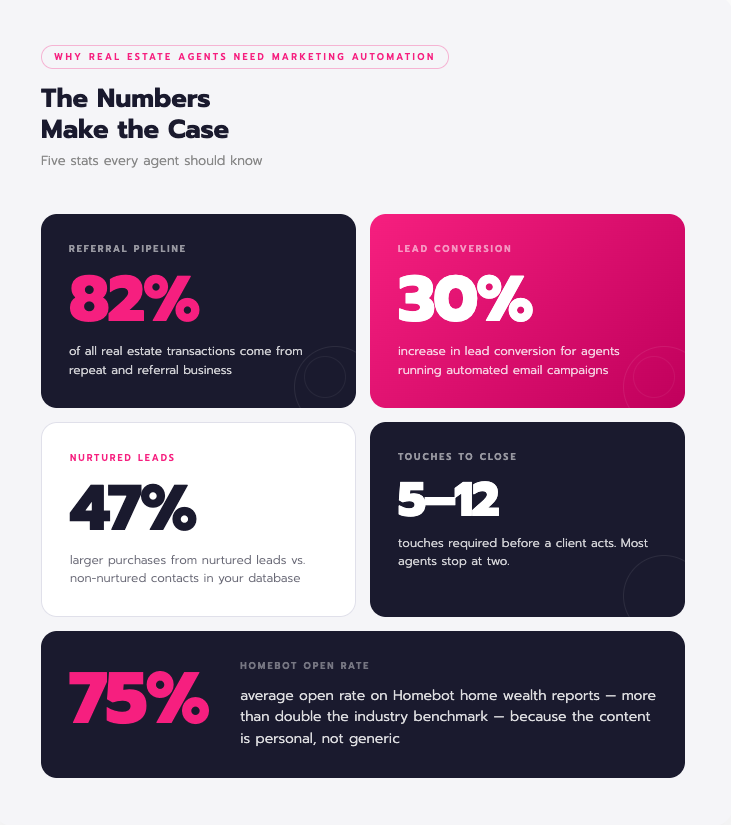
Most agents have 200 to 500 past clients sitting in a CRM or spreadsheet they haven't meaningfully touched in months. And 82% of all real estate transactions come from repeat and referral business.
The clients you've already closed are statistically your best source of future business, and without a consistent engagement system, that source goes cold. Manual outreach doesn't scale because:
- You can't personally call hundreds of contacts every month while managing active deals
- Sporadic check-ins don't build the kind of consistent presence that earns referrals
- Every month without a touchpoint is a month a competitor could show up in their inbox instead
2. The Referral Window Closes Faster Than You Think
You don't lose past clients because they're unhappy. You lose them because they forget you exist at the exact moment it matters. Consider what the data shows:
- 40% of buyers found their agent through a referral
- 21% specifically chose someone they worked with before
- These numbers only hold if the client remembers your name when they're ready to act
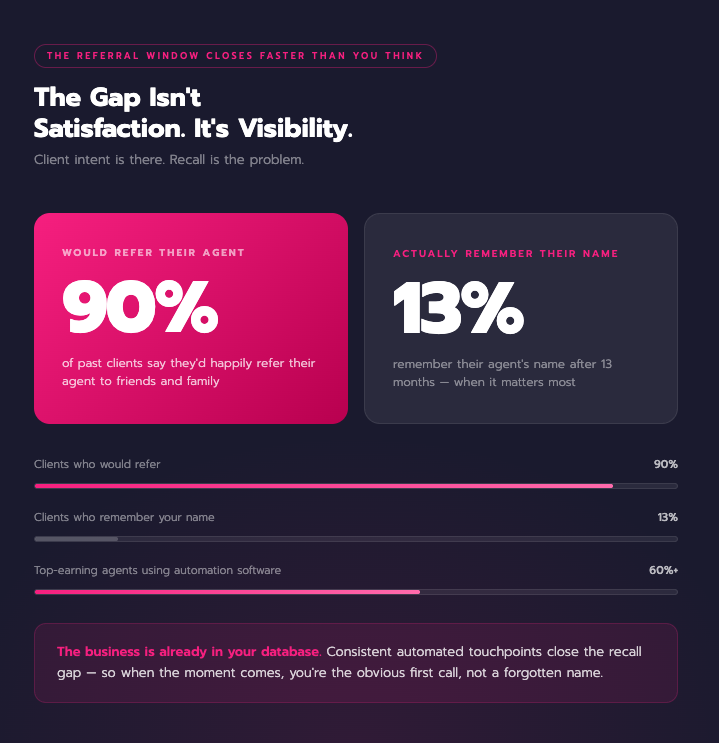
Without a consistent system keeping you present, you're not in the running. Someone else gets the transaction you earned.
3. Agents Who Automate Convert More Leads
High-earning agents aren't just better at relationships. They're better at follow-through. The numbers back it up:
- Automated email campaigns increase real estate lead conversion by about 30% because prospects are consistently nurtured without manual follow-up
- Drip campaigns generate 50% more sales-ready leads at 33% lower cost
- Agents running fully automated nurture sequences report up to 5x higher conversions and a 312% year-over-year revenue increase
More than 60% of real estate agents earning over $100,000 per year use referral and customer service software. More than 65% of agents earning under $35,000 don't. The gap isn't talent. It's automated systems..
4. Your Follow-Up Isn't Keeping Up
In real estate, 80% of sales require 5 to 12 touches before a client is ready to act. Most agents stop at two. Not because they don't want to follow up, but because doing it manually across a database of hundreds of contacts while managing active deals isn't realistic.
What automation makes possible instead:
- Consistent follow-up across your entire database without manual scheduling
- Nurtured leads that make 47% larger purchases than non-nurtured leads, meaning larger commissions from clients you already have
- Extra touches happening in the background, every month, without you thinking about it
5. You're Already Wearing Too Many Hats
Between active deals, showings, contracts, and client calls, there are only so many hours in the day. Agents using advanced automation report:
- 91% email open rates
- 5x more conversions
- 85% less time spent on email marketing tasks
The time savings alone justify the system. Everything else is upside.
Marketing automation doesn't ask you to add more to your plate. It removes the most repetitive, time-consuming communication tasks from your plate entirely and handles them more consistently than any manual process ever could.
How Real Estate Agents Can Use Marketing Automation
The stats make the case. The next question is where to actually start. Marketing automation isn't one single tool or one single workflow. It shows up in different parts of your business, and the agents getting the most out of it are using it across all of them.
1. Staying Connected After Closing (Without Thinking About It)
The post-close period is where most agents go quiet. The transaction is done, life gets busy, and the client quietly fades from your contact list. An automated post-close engagement sequence changes that.
What this looks like in practice:
- A home anniversary message on their one-year mark
- Monthly home value updates showing how their equity has grown
- Market snapshots when conditions in their neighborhood shift
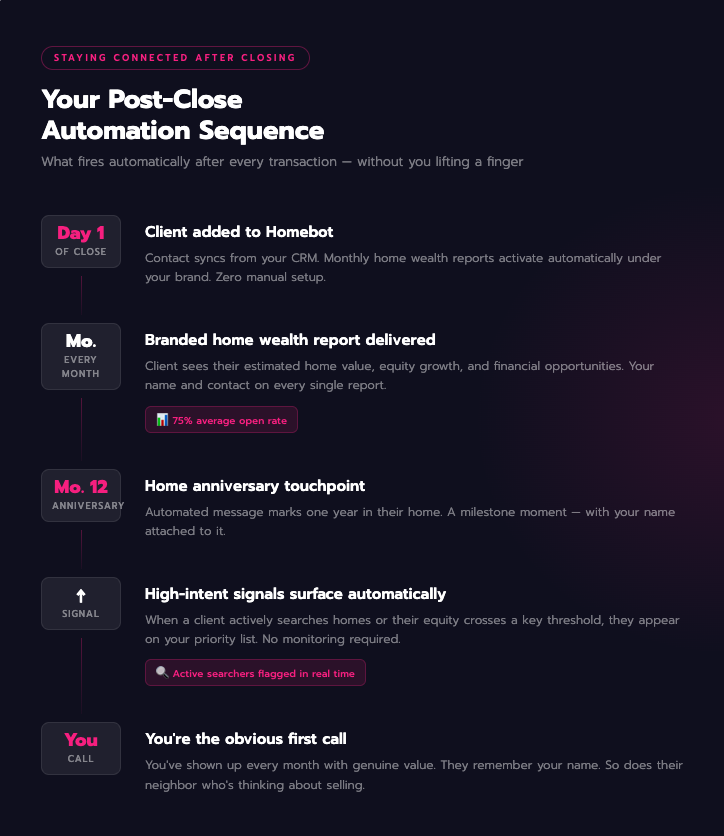
None of this requires you to initiate anything. With the right marketing automation tools in place, these touchpoints trigger on their own based on their close date and property data.
2. How Real Estate Agents Automate Follow-Ups with Potential Sellers
This is where automation gets particularly powerful, and where automated home value reports do the heavy lifting without a single cold call.
Here's how the sequence works:
- Your past client receives a monthly report showing their current estimated home value and equity growth over time
- When their equity has grown significantly, that report makes it visible and plants the idea of a move naturally, before you ever pick up the phone
- Behavioral tracking shows you exactly which clients are actively engaging with their home value data, so you know who your warmest conversations are before you reach out
When they're ready to act, you're already the trusted source of that information. Not a stranger they found through a search.
3. Keeping Buyers Engaged Through a Long Search
Buyers have long search cycles. They might start casually browsing six to twelve months before they're ready to make a move. If you're not part of that process, someone else will be.
Automated buyer nurtures keeps you in the picture from day one:
- New listing alerts based on their saved home search criteria
- Affordability snapshots when market conditions shift
- Check-ins timed to their behavior rather than your calendar
Personalized email marketing delivers 6x higher transaction rates than generic campaigns. A listing alert triggered by a buyer's actual search criteria is relevant. A generic "great time to buy!" email is junk in the inbox. Automation makes the standing-out and adding real value easy.
4. Building a Referral Engine That Runs Itself
Most real estate agents earn 42% of their business from repeat clients and past client referrals. But referrals don't happen because you asked for them once at closing. They happen because you've stayed valuable and memorable long after the transaction ended.
What a referral engine looks like when it's automated:
- Monthly touchpoints delivering genuine financial value, like home equity updates, keep your name top of mind without manual effort
- Past clients who hear from you regularly are far more likely to mention your name when a friend asks for an agent recommendation
When a past client's friend mentions they're thinking about buying or selling, your name surfaces because you've been showing up every month with something worth reading. That's what consistent, automated client engagement makes possible at scale.
What Is the Best Marketing Automation for Real Estate Agents?
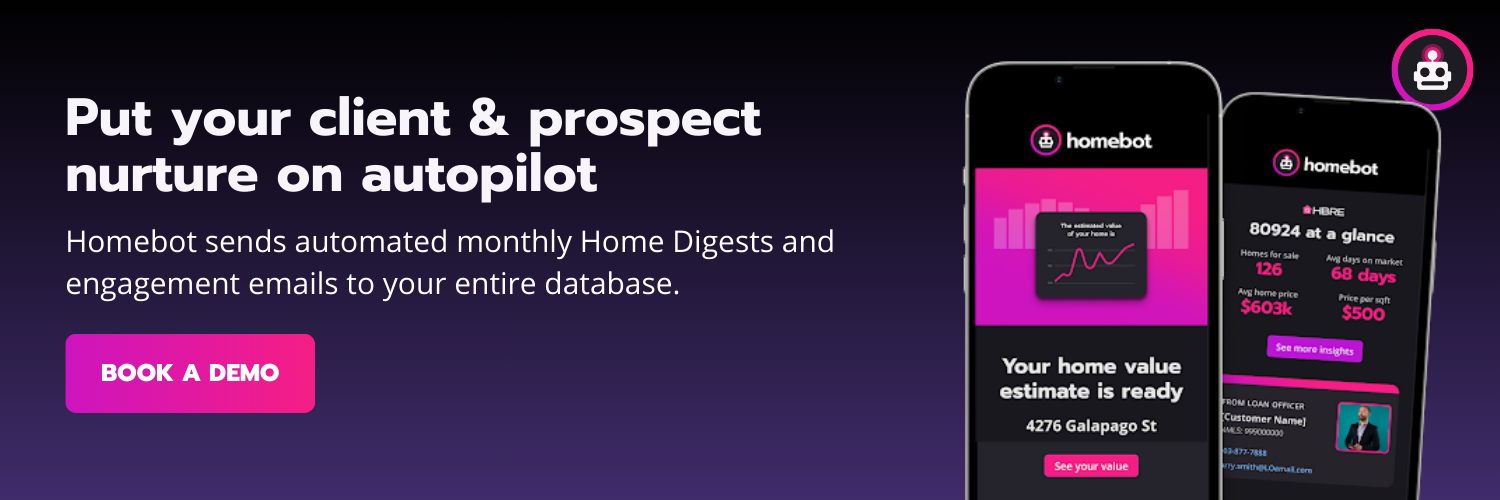
There's no single tool that does everything. The most effective setup includes a CRM that handles contact organization and task automation, paired with a client engagement platform with automated email marketing and private search insights that delivers content your clients actually want to open.
Here's how the core layers break down and what to actually do with each one.:
1. CRM Platforms: Your Foundation
Your CRM is where contacts live, tasks are triggered, and pipelines are managed. Without it, your automation has nowhere to anchor.
What a real estate CRM handles:
- Contact organization and segmentation
- Follow‑up sequences and email drips
- Task reminders and call prompts
- Pipeline tracking and deal stages
- Integrations across your tech stack
Tools to consider: Follow Up Boss, kvCORE, BoomTown, LionDesk. The right CRM is the one you commit to using consistently, not the newest one you’re evaluating.
Actions you can take:
- Create simple segments (e.g., “Past Clients – Homeowners,” “Active Buyers,” “Cold Leads”, “Friends + Family”).
- Build one basic new‑lead action plan: immediate text/email, plus 7–10 days of follow‑up.
- Set an automation that, when a deal moves to “Closed,” tags the contact as a past client and enrolls them in your long‑term nurture (Homebot + email list).
2. Client Engagement Platforms: The Value Delivery Layer
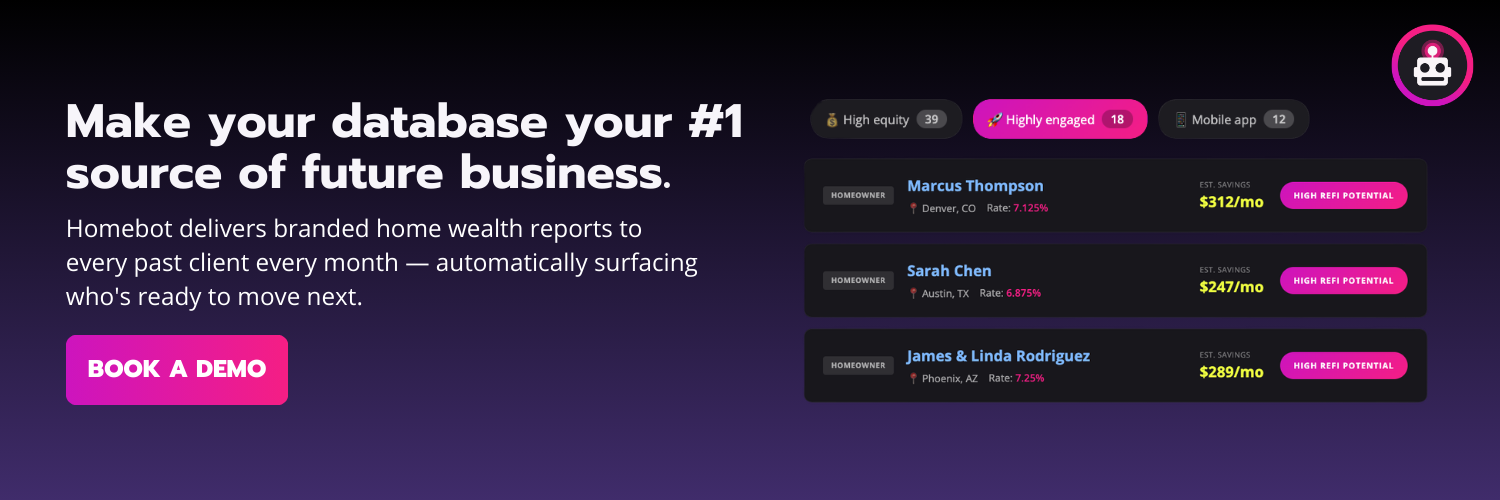
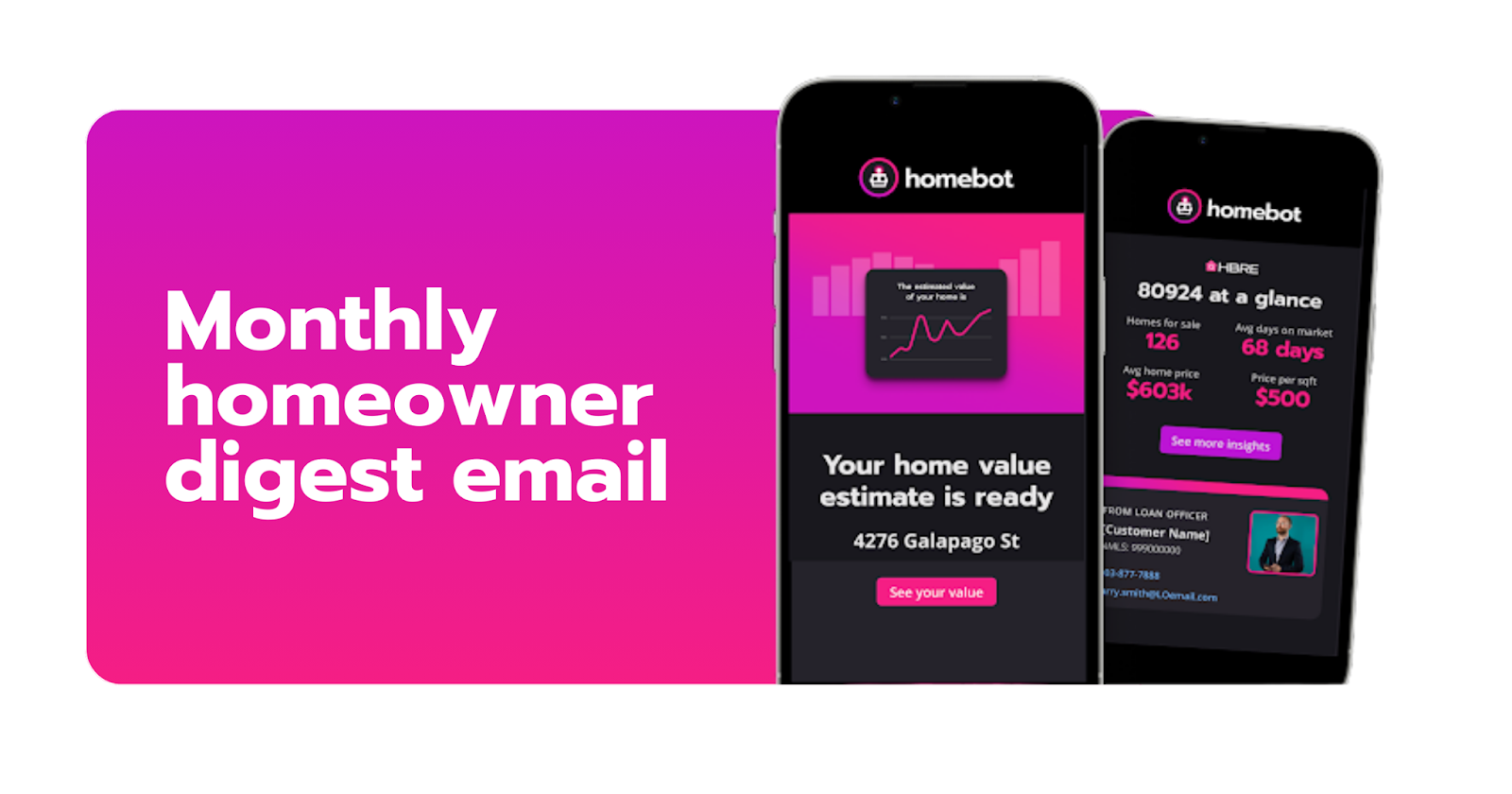
A CRM tracks relationships. A client engagement platform like Homebot strengthens them. This is the layer that delivers what your clients actually engage with: personalized home value reports, equity tracking, market insights, and buyer search experiences, all branded to you.
Homebot’s Home Digest is built specifically for this. Monthly home wealth reports go out automatically under your brand and show each client:
- Their current estimated home value
- Equity growth over time
- Financial opportunities based on their specific property and situation
Engagement data flows back to you so you know exactly who to prioritize:
- Who opened the report
- Who explored refinance options
- Who started browsing homes
Homebot reports average a 75% open rate, more than triple the industry benchmark, because the content feels like a personal financial dashboard instead of another generic email.
Actions you can take:
- Import your past clients and sphere into your client engagement platform so they receive monthly home wealth reports.
- Turn on notifications when someone opens a report, requests a CMA, or starts browsing homes.
- Send video to pre-segmented lists of clients who are likely to sell, likely to move, requested a CMA, etc.
- Create a “Hot from Homebot” list in your CRM and a simple rule: anyone who shows high engagement gets a same‑day call, text, or personal email.
3. Email Marketing Tools: Reach at Scale
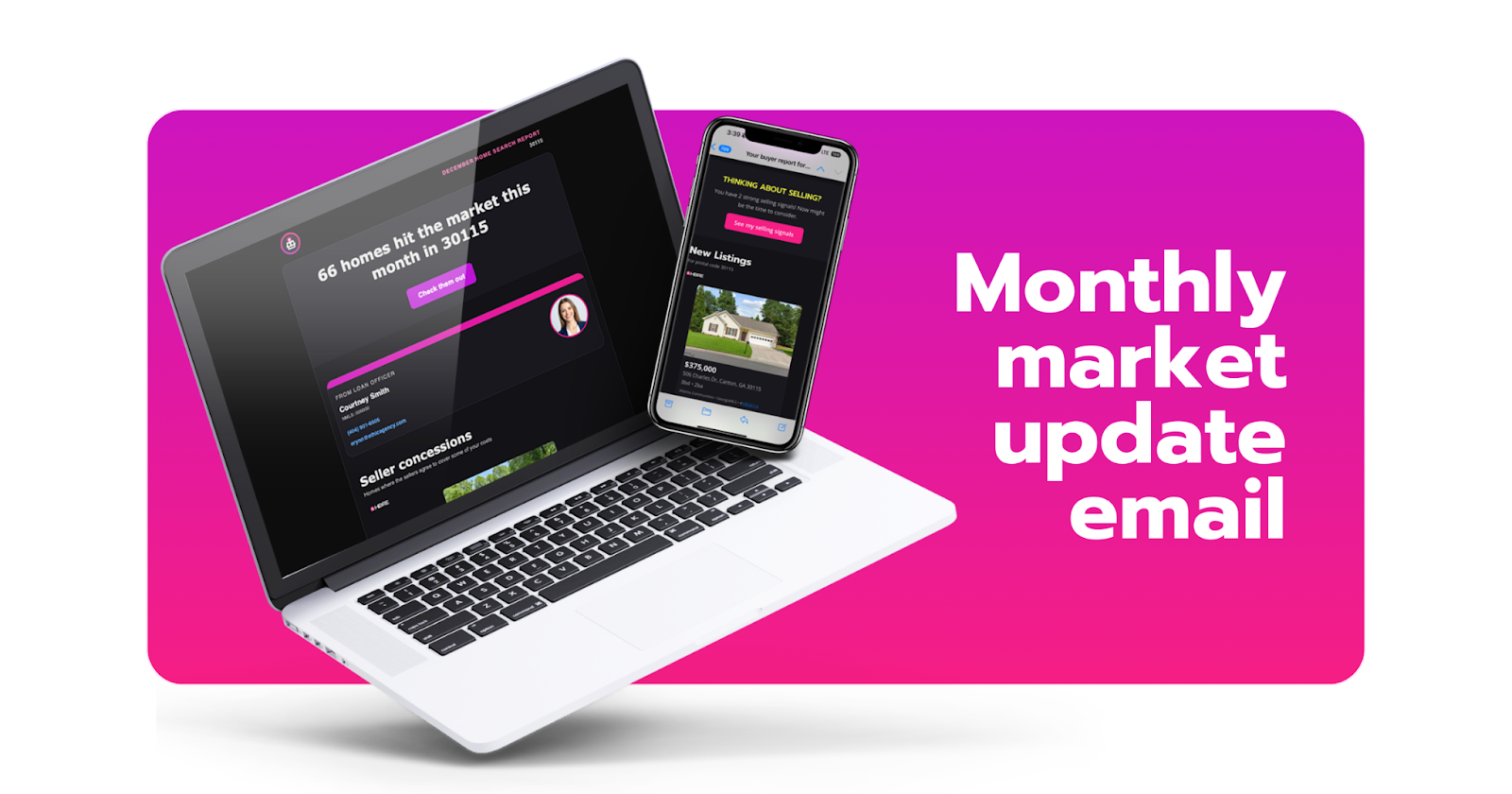
For market updates, newsletters, and campaign sends, a dedicated email marketing platform gives you broad reach efficiently. Mailchimp and Constant Contact are widely used, and both offer:
- Automation sequences
- List segmentation
- Performance tracking and basic A/B testing
These tools are strong for broadcasting to your full database. They’re less suited to the kind of one‑to‑one personalization that a client engagement platform delivers, which is why they work best together, not as substitutes.
Actions you can take:
- Create one monthly “market update + helpful tip” email and send it to your full database.
- Set up a 3–4 email welcome sequence for new subscribers that explains how you work and what they can expect from you.
- Export your “Past Clients – Homeowners” and “Active Buyers” segments from your CRM monthly into your email platform so your emails hit the right people.
4. Private Home Search: Keep Your Buyers in Your Ecosystem
When your clients browse homes on public search platforms, those sites capture their data and sell it to other agents and lenders. Your relationship is at risk the moment they start searching elsewhere.
A private branded home search experience keeps buyers searching with your name and contact info on every listing page. They can play with calculators, request a tour, and ask questions freely, without their information being sold as a lead. When they have questions about a property or financing, they reach out to you, not a competing agent who paid for their click.
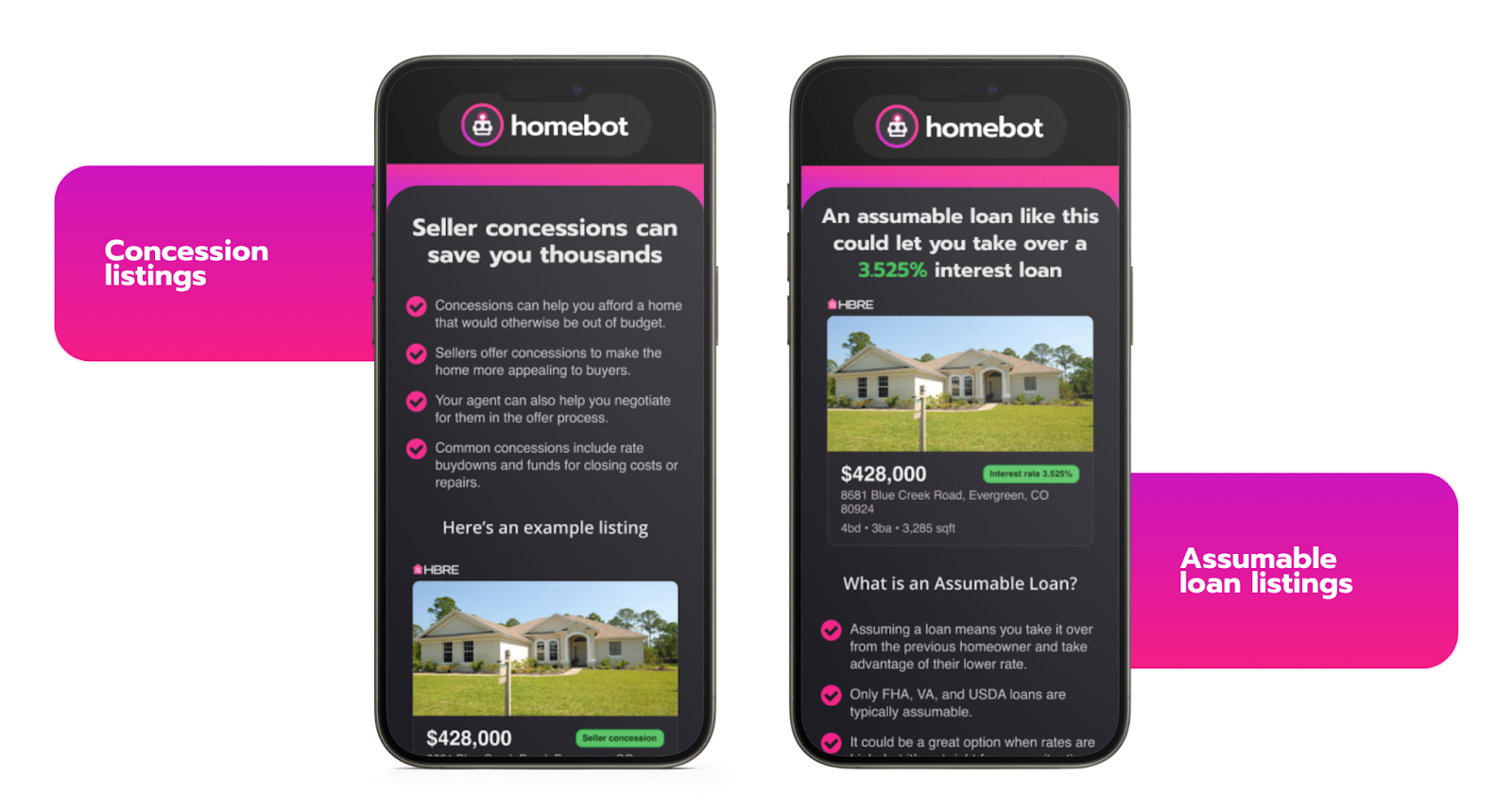
Homebot’s Private Home Search integrates with hundreds of MLS systems nationwide and includes filters you won’t find on major portals, like seller concessions, assumable loans, and buydown calculators that help buyers understand the full financial picture on any property.
Actions you can take:
- Give every serious buyer access to your private search portal and set up at least one saved search based on their criteria.
- Turn on alerts so you see when clients favorite homes, expand their price range, or start using advanced filters.
- Add a simple rule: if a buyer shows a spike in activity, move them into a “Hot Buyer” list in your CRM and schedule an outreach touch within 24 hours.
How Real Estate Marketing Automation Tools Work Together: A Real-World Automation Stack
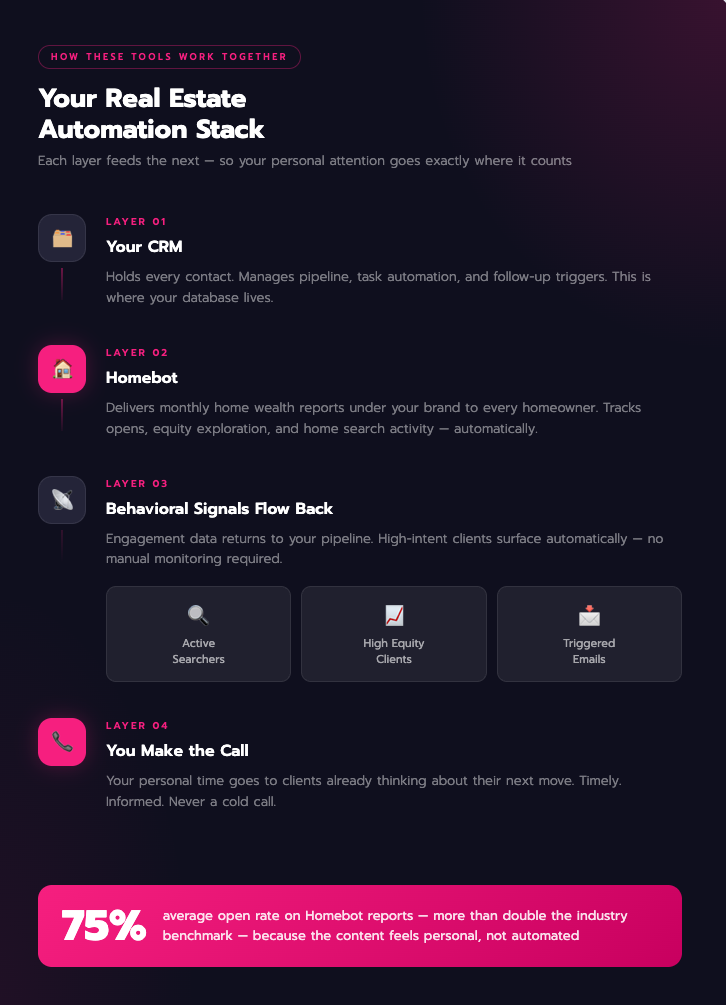
The real power of marketing automation for real estate agents isn't any single tool in isolation. It's how they connect. Each layer feeds the next: your CRM holds the contacts, your engagement platform delivers the value, and the behavioral signals that come back tell you exactly where to focus your personal attention.
1. Your CRM + Homebot: The Core Integration
Your CRM handles contact management, task automation, and pipeline tracking. Homebot handles monthly client engagement, including home value reports, equity updates, and behavioral tracking that keep past clients connected to you.
Here's what the integration looks like in practice:
- Contacts sync from your CRM into Homebot automatically. No manual data entry, no CSV uploads every time someone closes.
- Monthly home wealth reports go out under your brand to every homeowner in your database.
- Engagement data flows back, showing who opened, who explored their options, and who started browsing homes, so high-intent clients rise naturally to the top of your pipeline.
- When a client shows strong engagement signals, your CRM triggers your follow-up task. You reach out knowing they've been looking at their equity and browsing homes in a specific price range. That's a timely, well-informed conversation, not a cold call.
The result: your personal time goes toward the clients most likely to transact, while automation handles consistent touchpoints across your entire database.
2. Email Marketing + Opportunity Lists: Reach the Right People at the Right Time
Not every contact in your database deserves the same outreach at the same time. The agents getting the most out of automation aren't blasting their entire list. They're building smart segments based on behavior and financial position, then letting triggered emails do the work.
Here's what that looks like in practice:
- Actively searching clients: Anyone engaging with home search in Homebot is already in buying mode. An automated email triggered by that activity, whether a personalized listing roundup or a simple check-in, reaches them at exactly the right moment without you monitoring the platform manually.
- High equity clients: Clients whose equity has grown significantly are your most likely move-up candidates. A triggered email surfacing their current equity position and what it could mean for their next purchase plants the idea before they start looking elsewhere.
- Scheduled call prompts: When a client hits a threshold, high engagement, high equity, a specific anniversary, your automation doesn't just send an email. It puts a call on your calendar so your personal outreach is timed to when it's most likely to land.
The result is a pipeline that surfaces itself. Instead of guessing who to call, you have a live list of clients who are already thinking about their next move, and a sequence already running to keep you front of mind until they're ready to act.
3. Your CRM + Private Home Search: Keep Buyers in Your Ecosystem
When a buyer enters your pipeline, your CRM captures them. But where do they go to search for homes? If the answer is public search tools, you're at risk before the transaction ever closes. Those platforms are designed to capture buyer attention and redirect it, often to competing agents or lenders who paid for placement.
Here's what it looks like when your CRM connects to a private branded search experience instead:
- Your buyer gets a direct link to a home search experience with your name, photo, and contact info on every listing.
- Client activity, including which homes they viewed, saved, and returned to, can be fed back into your CRM using tools like Zapier so you can see exactly where their head is at.
- When they have a financing question, it routes to their lender (you’ll be cc’d, keeping you in the loop). When they have a question about a home, it routes to you. No ambiguity, no dropped handoffs.
- Automated emails triggered by their search behavior, like a follow-up when they save a listing or revisit a neighborhood, keep the conversation moving without you manually monitoring their activity
Your Database Is Ready. Now Build the System That Works It.
Most agents have everything they need to grow their business sitting in a contact list they haven't fully activated. The relationships are there. The referral potential is there. What's been missing is the system that keeps those connections alive, surfaces the clients who are ready to move, and puts you in front of them at the right moment.
Homebot gives real estate agents the opportunity to create that exact system.
- Monthly home wealth reports keep past clients engaged under your brand.
- Behavioral data surfaces who's actively searching or sitting on significant equity.
- Private home search keeps buyers in your ecosystem instead of Zillow's.
- Seamless integrations with the CRM and marketing tools you're already using, so everything works together without adding complexity to your workflow.
All of it runs automatically, so your personal time goes toward the conversations most likely to close. Request a Homebot demo today to make the most out of your database.