Industry Hot Takes
The Private Exclusive Listings War Is Heating Up. Here's How Smart Loan Officers & Real Estate Agents Are Still Winning

Compass and Rocket just signed a three-year deal to display private exclusives on Redfin, the latest move in the private exclusive listings battle that has been building all year. Zillow fired back with Zillow Preview, enrolling 29 brokerages in a week. Compass dropped its lawsuit. And every real estate headline is asking the same question: who wins the portal wars?
While the portals fight over listing inventory, your past clients are getting closer to a transaction. If you're not already in that conversation, you're one Zillow search away from losing a deal you already earned. The private exclusive listings war isn't the threat. Losing the pre-search relationship is.
In this post, you'll get a breakdown of what's actually happening in the market, why it creates urgency for your database right now, and how Homebot's new Opportunity Lists give you a prioritized view of which clients are approaching a transaction before they ever open a portal.
A Quick Primer: What the Private Exclusive Listings Battle Is Actually About
For decades, organized real estate ran on a simple rule called Clear Cooperation: if you're going to sell a home, it goes on the MLS, and every participating agent gets a fair shot. The MLS was the single source of truth, and portals like Zillow built their entire business model on top of it.
That's changing fast. Here's how the three main players moved, and what the fallout looks like for loan officers on the ground.
How Compass Started the Fight
Compass, now the largest brokerage in the U.S. after acquiring Anywhere Real Estate, launched a three-phase marketing strategy that keeps private exclusive listings within its network before they ever hit the MLS. Their argument: sellers should choose how and when their property is marketed. Their motivation: listing agents capture more buyer leads when inventory stays in-house.
How Zillow and Rocket Responded
Three major moves happened in quick succession:
- Zillow banned any listing that was publicly marketed without being shared on the MLS within 24 hours. Compass sued, and a judge issued a preliminary injunction in Zillow's favor.
- Zillow then reversed course entirely, launching Zillow Preview — a pre-market program with Keller Williams, RE/MAX, HomeServices of America, Side, and United Real Estate. 29 brokerages joined in the first week. Compass dropped its lawsuit.
- Rocket/Redfin signed a three-year alliance with Compass to display private exclusive and Coming Soon listings on Redfin. Buyer leads go directly to Compass listing agents, and Rocket sweetens the deal with a one-point rate buydown for Compass clients.
The Rocket Redfin acquisition had already created an integrated ecosystem of search and lending. This deal extends that reach further into the private exclusive listings space.
What It Means for Loan Officers & Agents on the Ground
Listing fragmentation is the practical outcome. Different portals are striking exclusive deals with different brokerages, and consumers may need to check multiple sites to see everything that's available.
Why the Private Exclusive Listings War Matters for Loan Officers and Agents (But Not the Way You Think)
Most industry commentary stops here: portal X gains an advantage, portal Y loses ground, and agents should pick a side. We see it differently. Here are three reasons why the private exclusive listings battle matters to your business, and none of them have to do with which portal wins.
1. Your past clients are approaching a transaction right now
Homebot CEO Ernie Graham puts it plainly: the portal wars are a distraction from the real opportunity. While Compass, Zillow, and Rocket fight over listing inventory, the homeowner you closed two years ago is quietly thinking about:
- Whether they have enough equity to renovate their kitchen
- Whether rates have dropped enough to make refinancing worthwhile
- Whether their growing family means it's time to look for something bigger
Those are your conversations to have. If you're having them consistently, it doesn't matter which portal has which listing, because you identified the intent first.
2. The moment a client opens a portal, you're already competing
That's what Ernie means when he describes Homebot as "the system that retains clients before they become leads." Once a homeowner starts actively searching on any portal, they become a shared lead:
- They fill out forms
- They click "Contact Agent"
- They get matched with whoever is paying for that click
The relationship you spent years building is now competing with an algorithm. But if you're already engaged through personalized equity insights, refinance scenarios, and home value updates, you're not competing. You're the trusted advisor they call first.
3. Client retention is the only durable competitive advantage independent professionals have
Portals have unlimited marketing budgets. They can buy listing inventory, sign exclusive deals, and outspend any independent loan officer or agent. What they can't replicate is a pre-existing relationship with your specific client. A client retention strategy for loan officers that operates before the search starts is the one advantage no portal consolidation can touch.
How Homebot Captures Client Intent Before They Ever Open a Portal
The portal wars are fundamentally about open marketplaces fighting for control of listing inventory. Zillow wants all the listings. Compass wants to control who gets the leads. Rocket wants to own the financing conversation. Each player is trying to build a bigger, better open marketplace.
Homebot plays a different game entirely.
A Private Conversation, Not an Open Marketplace
Instead of competing for attention in the open marketplace, Homebot creates a private, ongoing conversation between you and your clients. Inside that ecosystem, you're not fighting for impressions against every other lender and agent on a portal. You're the only voice in the room — and that conversation generates something portals can't touch: pre-search intent signals that reveal when a client is approaching a transaction before they ever start searching.

What Pre-Search Intent Signals Look Like
When a homeowner uses a cash-out refinance calculator inside their Homebot digest, that's intent. When they browse listings through the discovery experience Homebot provides, that's an intent signal.

When the AI identifies that their equity position has shifted enough to make a refi viable and the homeowner engages with that insight, that's a signal no portal will ever capture, because it happened before the homeowner ever typed "homes for sale" into a search bar.
- Cash-out refinance calculator usage: the homeowner is actively thinking about liquidity or renovation financing
- Repeated home value check-ins: tracking market movement, often in preparation for a sale
- Listing browsing within the Homebot experience: early shopping mode before registering on any portal
- Engagement spikes on move-up scenarios: modeling what upgrading would actually cost
How Homebot Turns Those Signals Into a Prioritized Pipeline with Opportunity Lists
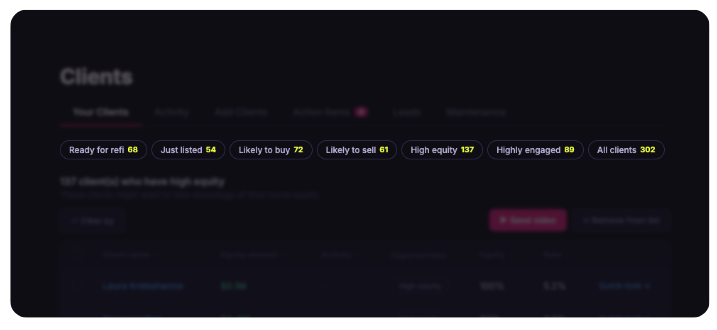
This is why we built the new Clients Tab with Opportunity Lists to take those pre-search intent signals and turn them into organized, actionable intelligence. Instead of a flat database, you get a prioritized view of who in your network is approaching a transaction, and what kind. Here are the five opportunity lists now available:
Cash Out Capable
Clients with sufficient equity to tap into their home's value. This isn't just math (though the math matters). When a client who qualifies for a cash-out also engages with equity-related content in their Homebot digest, that signal jumps from "potentially qualified" to "likely interested."
Refi Ready
Clients whose current rate, equity, and financial position make them strong refinance candidates. The combination of financial qualification plus behavioral signals (calculator usage, scenario exploration) gives you a much richer picture than credit monitoring alone.
Likely to Buy
This goes beyond a simple "touched a calculator" trigger. Homebot analyzes a range of behavioral signals, including listing browsing, buy-up scenario engagement, and AI-generated financial modeling, to surface clients showing real buying intent before they register on a portal.
Likely to Sell
Homebot's AI seller predictions identify homeowners who are showing signs of an upcoming move. This is one of the most powerful lists in your arsenal, because a seller in your database who lists with you is also a buyer who finances with you. Explore how listing alerts outperform trigger leads on every metric that matters.
Just Listed
When a client in your database lists their property, they need somewhere to live. 98% of the time, a seller is also a buyer. This list surfaces that intent automatically, giving you the chance to be part of the buying conversation before your client starts shopping on Redfin.
Each of these lists represents a moment where your client is approaching a transaction but hasn't yet entered the open marketplace. That window is everything. It's the difference between being a trusted advisor who proactively reaches out and being one of twelve lenders competing for a portal lead.
Private Exclusive Listings Fragmentation: Why This Gets More Valuable, Not Less
As private exclusive listings spread across more portals and private networks, the value of owning the pre-search relationship increases. Here's why.
Reason 1: More platforms means clients need a guide more than ever
If Zillow has some listings, Redfin has others, Compass keeps a chunk private, and Homes.com strikes its own deals, consumers face a genuinely confusing search experience. The homeowner who previously went to one portal now has to check several. That friction creates anxiety and indecision.
A loan officer or agent who cuts through that confusion already knows:
- What the client is looking for
- What they can afford
- What makes financial sense for their situation
You know all of that because you've been in the conversation for months. The more fragmented the market gets, the more valuable that relationship becomes.
Reason 2: Listing access no longer determines who wins the transaction
The portals are fighting over who gets to show the inventory. But inventory access is becoming table stakes. Zillow Preview, Redfin, and Compass all have different slices of it. What none of them have is your relationship with your specific client. The professional who already knows a homeowner is thinking about moving will be in the room when the transaction happens, regardless of where the listing was found.
Reason 3: Co-branded visibility compounds in a way portal leads never will
Portal leads reset with every transaction. Your relationship with a past client doesn't have to. Loan officers who co-sponsor agents on Homebot through the Homebot Network stay visible alongside:
- Real estate agents
- Title agents
- Insurance agents
All on the same client's digest, month after month. The results compound accordingly:
- 86% average increase in monthly client reach
- 50% more client conversations
That's the foundation of the agent-lender partnership strategy that generates referrals without cold outreach, because visibility builds over time instead of resetting after every transaction.
Conclusion: The Portals Can Fight Over Listings. You Should Be Fighting for Relationships.
If you're a Homebot user, the new Clients Tab is live. Go check your Opportunity Lists. You'll see clients organized by the type of opportunity they represent, not just a flat database, but a prioritized view of who in your network is approaching a transaction.
If you're not using Homebot yet, think about this: every day your database sits unengaged, your clients are one Zillow search away from becoming someone else's lead. The portal wars aren't going to settle down. Listing fragmentation will keep accelerating. The one constant? The professionals who stay in the conversation win the transaction. See Homebot in action.